Searching for the full mouth dental implants cost can produce confusing results. One dental clinic may advertise a surprisingly low starting price, while another may quote tens of thousands of dollars for what appears to be the same treatment. The difference usually comes from what the package includes, the number of arches treated, the quality of the final teeth and whether additional procedures are required.
In the United States, a fixed All-on-4 restoration commonly costs approximately $15,000 to $25,000 per arch when made with acrylic or PMMA. A premium zirconia restoration may cost approximately $25,000 to $38,000 per arch. Replacing both arches can therefore reach roughly $30,000 to $70,000 or more, especially when extractions, sedation, grafting and complex surgery are required.
These prices are broad estimates rather than guaranteed fees. The only way to determine your actual cost is to undergo a clinical examination, diagnostic imaging and personalised treatment planning.
What Does “Full Mouth Dental Implants” Mean?
Full mouth dental implants replace most or all missing or failing teeth in the upper jaw, lower jaw or both. Unlike conventional dentures, the replacement teeth are supported by dental implants placed in the jawbone.
The treatment does not always require one implant for every missing tooth. In many cases, four, six or more strategically positioned implants support a complete arch of prosthetic teeth.
Common full-mouth restoration options include:
- Fixed All-on-4 bridges
- Fixed All-on-6 bridges
- All-on-X restorations
- Removable implant-supported dentures
- Multiple individual implants and implant bridges
Implant-supported dentures offer more stability than conventional dentures because they attach to implants placed in the jaw.
Average Full Mouth Dental Implants Cost
The price varies according to the treatment design and restoration material.
| Treatment option | Estimated U.S. price |
|---|---|
| Removable implant-supported denture | $10,000–$25,000 per arch |
| Fixed acrylic or PMMA full arch | $15,000–$25,000 per arch |
| Fixed zirconia full arch | $25,000–$38,000 per arch |
| Both fixed arches | $30,000–$70,000+ |
| Multiple individual implants and bridges | $60,000–$100,000+ |
The term per arch means either the complete upper row or complete lower row of teeth. A price advertised per arch should not be mistaken for the cost of replacing the entire mouth.
A clinic may advertise treatment “starting from” a low figure, but that amount may exclude the final bridge, tooth extractions, sedation or supporting procedures. Current U.S. pricing research indicates that these exclusions commonly explain the difference between advertised prices and final treatment costs.
Cost of All-on-4 Dental Implants
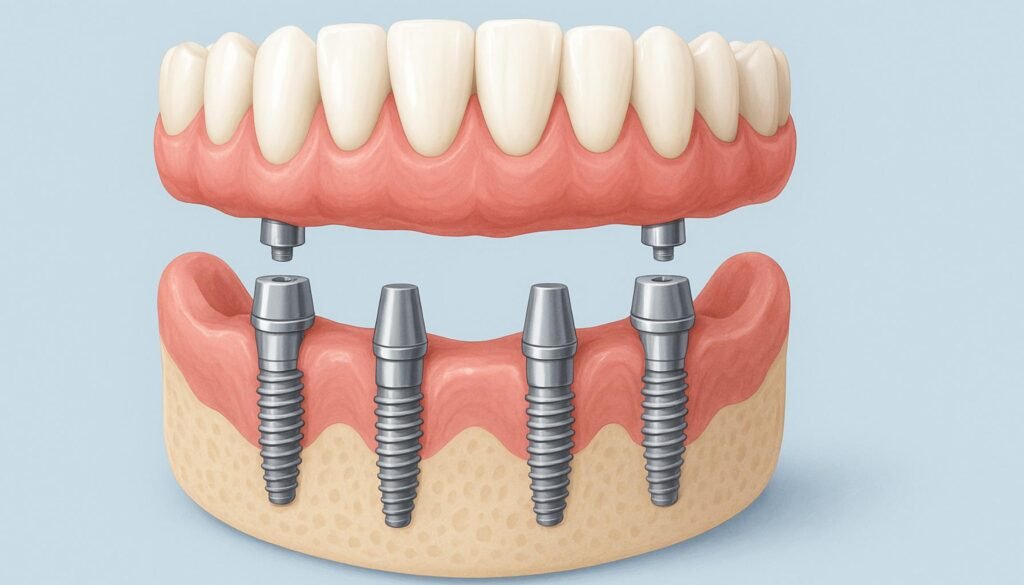
All-on-4 is a full-arch treatment in which four implants support a complete row of replacement teeth. The rear implants may be placed at an angle to use available bone more effectively.
An acrylic or PMMA All-on-4 arch generally costs approximately $15,000 to $25,000, while a zirconia arch may cost $25,000 to $38,000 in the United States.
The treatment can cost less than placing individual implants throughout the mouth because fewer implants and prosthetic components are required. It may also reduce the need for extensive bone grafting in selected patients, although this is not guaranteed.
The price can include:
- Four dental implants
- Implant abutments
- Surgical placement
- A temporary fixed bridge
- A permanent bridge
- Routine follow-up appointments
However, package contents differ between clinics. Patients should request a written breakdown before accepting an advertised offer.
Cost of All-on-6 Dental Implants
All-on-6 treatment uses six implants to support one full arch. The additional implants may distribute chewing forces across a wider area and provide more support when sufficient bone is available.
Because two additional implants, abutments and surgical sites are involved, All-on-6 can cost more than All-on-4. A full All-on-6 arch may cost approximately $20,000 to $40,000 or more, depending on the provider and bridge material.
More implants do not automatically mean a better result. The correct number depends on bone density, anatomy, bite force, implant position and the design of the final restoration. Personalised digital planning is essential because the optimal approach differs between patients.
Cost of Implant-Supported Dentures
An implant-supported denture may provide a more affordable alternative to a fixed bridge. It connects to implants for improved stability but can be removed for cleaning.
The estimated cost can range from approximately $10,000 to $25,000 per arch, depending on:
- Number of implants
- Attachment system
- Denture material
- Bone grafting needs
- Extractions and sedation
- Geographic location
Implant-supported dentures are more stable than conventional dentures and may improve chewing and comfort. However, attachment components can wear and require periodic replacement.
What Is Included in Full Mouth Dental Implant Pricing?
A comprehensive quote may contain much more than the implants themselves.
Consultation and Diagnostic Imaging
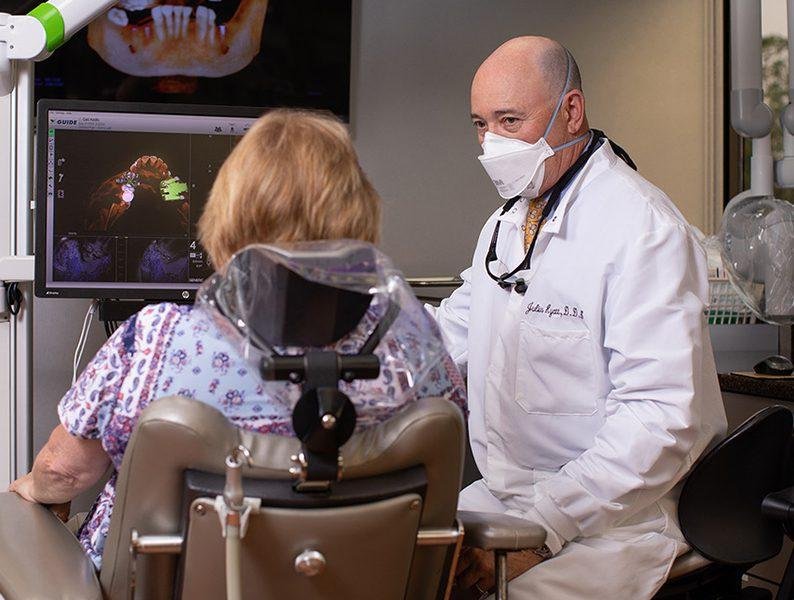
The dentist may use X-rays, photographs, digital impressions and cone-beam computed tomography to assess bone volume, nerve locations, sinuses and potential implant positions.
Some clinics include these services in the treatment fee. Others charge separately.
Tooth Extractions
Remaining teeth that cannot be saved may need to be extracted. Routine extractions may be included in a package, while surgical extractions can increase the total cost.
Implant Placement
This includes the surgical placement of titanium implants and may also include surgical guides, operating-room fees and local anaesthesia.
Temporary Replacement Teeth
Many patients receive temporary teeth during healing. Same-day teeth generally refer to a temporary restoration rather than the final permanent bridge.
Permanent Prosthetic Bridge
The final bridge is custom-designed after healing. Its material is one of the largest influences on total price.
Follow-Up Care
Treatment may include postoperative checks, adjustments and monitoring during healing. Long-term cleanings and repairs may be charged separately.
Acrylic Versus Zirconia Implant Bridge Cost
The material selected for the final bridge can add thousands of dollars to the treatment fee.
Acrylic or PMMA Bridges
Acrylic and PMMA restorations are generally the more affordable options. They are lightweight and easier to repair, but they may stain, wear or fracture sooner.
These bridges commonly appear in lower-priced All-on-4 packages.
Zirconia Bridges
Zirconia bridges generally cost more because they are strong, stain-resistant and designed to provide premium aesthetics.
The American Academy of Implant Dentistry’s patient resources note that no full-arch bridge material is indestructible. They also explain that zirconia is commonly preferred for durability when the bridge is properly designed, although hygiene access and adequate material thickness remain important.
The best material is not determined by price alone. Bite force, grinding habits, available space, appearance goals and maintenance requirements should all be considered.
Additional Procedures That Increase the Cost
Bone Grafting
Implants require sufficient bone for support. Bone grafting may be recommended when bone loss has occurred after long-term tooth loss, gum disease or infection.
Grafting can add several hundred to several thousand dollars, depending on the area and complexity.
Sinus Lift
An upper-jaw sinus lift may be required when insufficient bone exists beneath the sinus. This procedure increases both the treatment cost and healing time.
Sedation
Local anaesthesia may be included, but oral sedation, intravenous sedation or general anaesthesia can involve additional fees.
Cleveland Clinic notes that sedation may be available for patients who experience substantial anxiety about implant surgery.
Zygomatic Implants
Patients with severe upper-jaw bone loss may require advanced implants anchored in the cheekbone. This is a specialised treatment and can cost considerably more than standard All-on-4 surgery.
Treatment of Gum Disease
Active gum disease and infection must usually be controlled before or during implant treatment. Periodontal therapy can therefore add to the overall expense.
Why Are Some Full Mouth Implant Prices So Low?
Low prices may reflect a genuine promotional package, but they can also omit important treatment components.
A discounted advertisement may exclude:
- Permanent teeth
- Tooth extractions
- Bone grafting
- Sedation
- Implant abutments
- Diagnostic imaging
- Follow-up care
- Repairs or maintenance
A price may also apply only to one arch, even when the advertisement uses phrases such as “full mouth.”
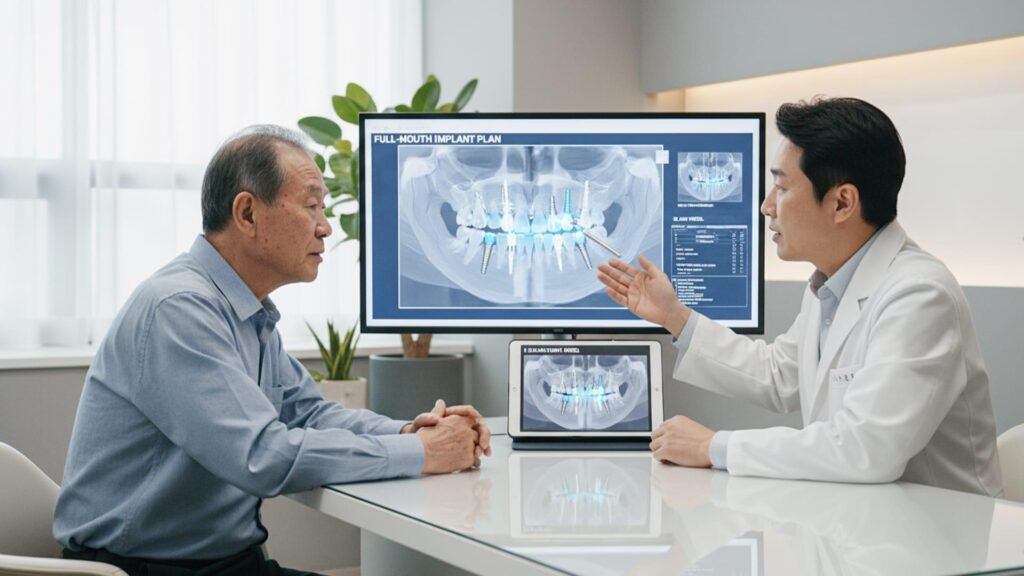
Ask for an itemised treatment plan that identifies the implant brand, number of implants, temporary restoration, final bridge material and all expected additional charges.
Does Insurance Cover Full Mouth Dental Implants?
Dental insurance may pay for part of the procedure, but full coverage is uncommon. Benefits vary according to the policy, annual maximum and whether implants are classified as a covered major service.
A plan may contribute toward:
- Extractions
- Diagnostic scans
- Sedation
- Implant crowns
- Dentures
- Bone grafting
Even when implants are covered, annual maximums can leave patients responsible for most of the bill.
Request a written pre-treatment estimate from the insurance company. This document can show which procedure codes are covered, excluded or subject to waiting periods.
Financing Full Mouth Dental Implants
Because treatment can cost tens of thousands of dollars, many clinics offer payment options.
Common financing methods include:
- Monthly healthcare financing
- In-house payment arrangements
- Personal loans
- Credit union loans
- Health Savings Accounts
- Flexible Spending Accounts
- Staged treatment
Before choosing financing, review the interest rate, promotional period, late-payment terms and total repayment amount. A low monthly payment may become expensive when stretched over several years.
How Long Do Full Mouth Dental Implants Last?
Dental implants can function for many years, but their lifespan depends on health, hygiene, treatment quality and daily habits.
The prosthetic bridge may require maintenance or eventual replacement because it experiences daily chewing forces. Acrylic teeth can wear or fracture, while even stronger zirconia restorations are not indestructible.
Long-term maintenance may include:
- Professional implant cleanings
- X-rays and examinations
- Screw tightening
- Bite adjustments
- Replacement of denture attachments
- Repair or replacement of the bridge
- Night guards for teeth grinding
Patients should include these future costs when calculating the true lifetime value of treatment.
How to Compare Dental Implant Quotes
Do not compare clinics using the headline price alone. Ask each provider the same questions:
- Does the price cover one arch or both arches?
- How many implants will be placed?
- Which implant brand will be used?
- Are extractions included?
- Is bone grafting included?
- Does the package include temporary teeth?
- What material will be used for the final bridge?
- Is sedation included?
- What follow-up care is provided?
- What happens if an implant or bridge component fails?
A more expensive proposal may offer greater value when it includes premium materials, advanced diagnostics and long-term support.
Are Full Mouth Dental Implants Worth the Cost?
Full-mouth implants may improve stability, chewing ability, speech and confidence for suitable candidates. Unlike loose dentures, fixed restorations remain attached during daily activities.
Implant-supported options can also provide greater retention than conventional dentures.
However, treatment involves surgery, healing, ongoing hygiene and substantial expense. Full-mouth implants are not automatically the right option for every patient.
A complete evaluation should compare:
- Fixed implant bridges
- Removable implant-supported dentures
- Conventional dentures
- Saving selected natural teeth
- Staged implant treatment
The best decision balances oral health, function, appearance, budget and the ability to maintain the restoration.
Frequently Asked Questions
What is the average full mouth dental implants cost?
Fixed treatment for both arches commonly costs approximately $30,000 to $70,000 or more. Premium materials and additional surgery can increase the total.
How much does one full arch cost?
An acrylic or PMMA full arch may cost around $15,000 to $25,000, while zirconia can cost around $25,000 to $38,000.
Is All-on-4 cheaper than individual dental implants?
Yes. All-on-4 usually costs less because four implants support a complete arch instead of using an individual implant for every missing tooth.
Are full mouth dental implants permanent?
The implants are intended as a long-term solution, but the attached bridge may require repairs or eventual replacement.
Can full mouth implants be completed in one day?
Implants and temporary teeth may sometimes be placed on the same day. The permanent bridge is generally delivered later after healing and evaluation.
Is zirconia worth the additional cost?
Zirconia may provide greater wear resistance and colour stability, but suitability depends on the treatment design, bite and budget.
Does dental insurance pay for All-on-4?
Some policies cover parts of treatment, but complete coverage is uncommon. Coverage must be confirmed directly with the insurer.
Can I get implants with bone loss?
Some patients with bone loss can receive implants after grafting or through alternative implant techniques. A 3D assessment is required.
Are cheap dental implants unsafe?
A lower price does not automatically mean unsafe treatment. However, patients should verify what is included, the clinician’s qualifications, the implant system and the standard of follow-up care.
How do I receive an accurate cost estimate?
Schedule a consultation with appropriate diagnostic imaging. Request a personalised, itemised quotation rather than relying on online starting prices.
Conclusion
The full mouth dental implants cost commonly ranges from around $15,000 to $38,000 per arch, depending on the implant design and bridge material. Patients restoring both jaws may spend approximately $30,000 to $70,000 or more. Extractions, sedation, bone grafting and premium zirconia restorations can increase the final expense.
A good treatment decision should not be based on the cheapest advertisement. Compare complete packages, ask about future maintenance and select a qualified dental professional who provides transparent pricing. Full-mouth implants can offer significant functional and personal benefits, but a comprehensive examination is essential before deciding whether the treatment is appropriate.