Human chorionic gonadotropin, commonly known as hCG, is the hormone that makes pregnancy detectable. When you take a home pregnancy test, you’re measuring the presence of hCG in your urine. In a chemical pregnancy, understanding hCG levels becomes crucial for diagnosis, monitoring, and planning your next steps. This guide breaks down everything you need to know about hCG levels during and after a chemical pregnancy.
What Is hCG and Why Does It Matter?
hCG is produced by cells that eventually form the placenta. After a fertilized egg implants in the uterine lining, these cells begin secreting hCG, which signals the corpus luteum to continue producing progesterone. This progesterone maintains the thickened uterine lining, creating a supportive environment for the developing embryo.
In a healthy pregnancy, hCG levels should double approximately every 48 to 72 hours during the first few weeks. This rapid rise is what makes early pregnancy tests increasingly accurate as days pass. However, in a chemical pregnancy, this pattern is disrupted.
hCG Levels in a Chemical Pregnancy
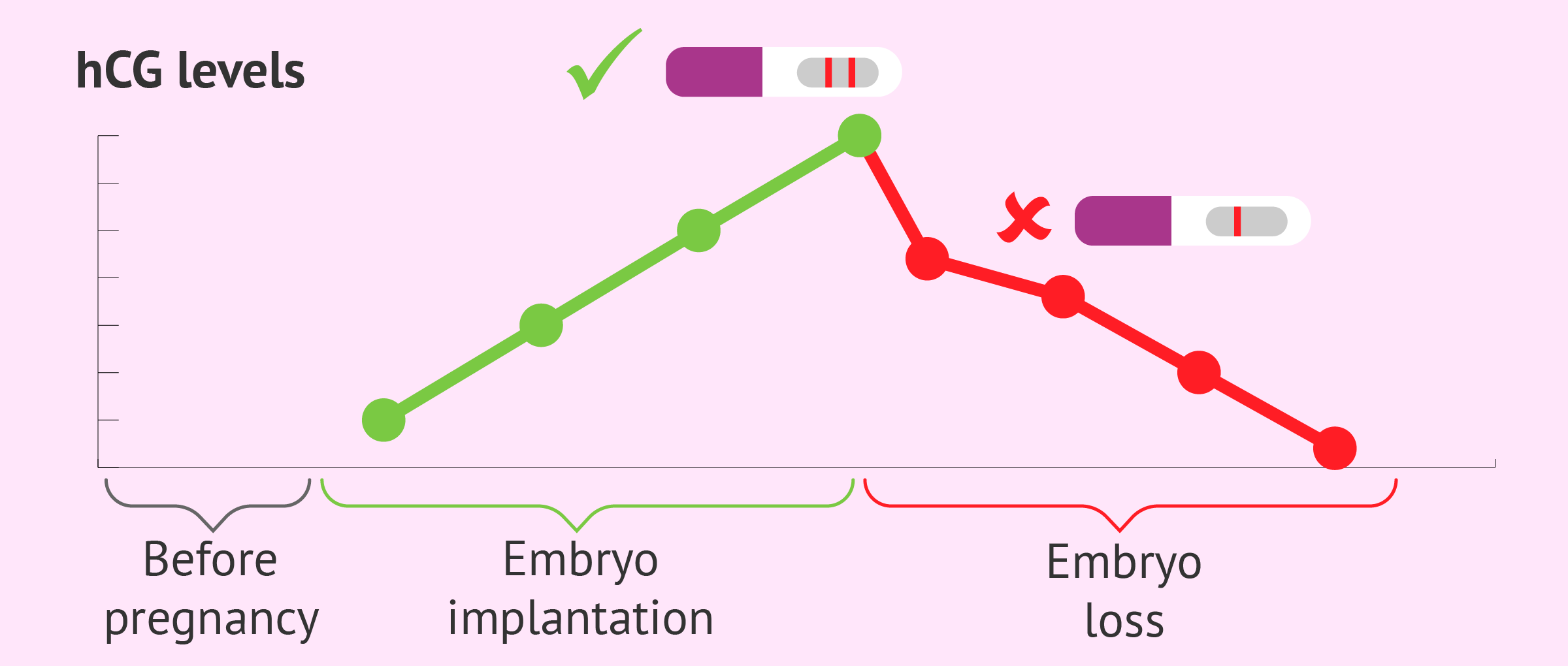
During a chemical pregnancy, hCG levels behave differently than in a viable pregnancy:
Initial Rise: After implantation, hCG levels begin to rise, often just enough to trigger a positive home pregnancy test. At this stage, levels might be anywhere from 25 to 100 mIU/mL.
Peak and Plateau: hCG levels reach a brief peak, typically much lower than in a healthy pregnancy. While a viable pregnancy at 4-5 weeks might show hCG levels of 100-5,000 mIU/mL, a chemical pregnancy rarely exceeds 100-200 mIU/mL.
Rapid Decline: Once the embryo stops developing, hCG production ceases. Levels begin falling by approximately 50% every 48 hours. Within one to two weeks, hCG should return to the non-pregnant baseline of less than 5 mIU/mL.
The hCG Timeline: What to Expect
Understanding the timeline of hCG changes can help you interpret your test results:
Days 8-11 after conception: hCG becomes detectable in blood (8-11 mIU/mL) Days 12-14: hCG may be detectable in urine; home pregnancy tests turn positive Days 15-22: In a chemical pregnancy, hCG peaks and begins declining Week 2-3 post-loss: hCG returns to non-pregnant levels
If you are tracking hCG through blood tests, your doctor will look for the doubling pattern. In a healthy early pregnancy, you should see levels increase by at least 66% every 48 hours. Stagnant or declining levels strongly suggest a chemical pregnancy or impending miscarriage.
Why hCG Drops After Chemical Pregnancy
The decline in hCG occurs because the embryo has stopped developing and the cells producing the hormone are no longer viable. Without a living embryo, there is no biological signal to maintain hCG production. Your body recognizes the loss and begins the process of returning to its pre-pregnancy state.
The speed of hCG decline depends on how high the levels reached before the loss:
- Low initial hCG (under 50 mIU/mL): May return to baseline within 3-5 days
- Moderate hCG (50-150 mIU/mL): Typically takes 7-10 days to normalize
- Higher hCG (150+ mIU/mL): May require up to two weeks to fully decline
Testing and Monitoring
If you suspect a chemical pregnancy, your doctor may recommend serial quantitative hCG blood tests. These tests measure the exact amount of hCG in your blood rather than simply detecting its presence. By comparing results from tests taken 48 hours apart, your doctor can determine whether levels are rising appropriately or falling.
Home pregnancy tests can also provide clues. A positive test that becomes progressively lighter over several days, or turns completely negative within a week, suggests declining hCG consistent with a chemical pregnancy. However, home tests are qualitative (yes/no) rather than quantitative, so blood tests provide more definitive information.
When hCG Doesn’t Drop: What It Means
If hCG levels do not decline as expected after a suspected chemical pregnancy, this could indicate:
- An ectopic pregnancy: Where the fertilized egg implants outside the uterus, most commonly in a fallopian tube. This is a medical emergency.
- Retained tissue: Though rare in chemical pregnancies, some tissue may remain and continue producing small amounts of hCG.
- A new pregnancy: If you conceived again shortly after the chemical pregnancy, rising hCG could indicate a new, viable pregnancy.
Persistent or rising hCG levels after a suspected loss always warrant medical evaluation.
hCG and Your Next Pregnancy
One of the most encouraging aspects of chemical pregnancy is that your body demonstrates the ability to conceive and implant. Many fertility specialists view a chemical pregnancy as a positive sign that conception is possible.
You can begin trying to conceive again as soon as hCG levels return to zero and you feel emotionally ready. Some studies suggest that women may be more fertile in the first few cycles following an early pregnancy loss. Tracking your hCG levels back to baseline ensures that a new pregnancy won’t be confused with residual hCG from the previous loss.
Tips for Monitoring hCG
- Request quantitative blood tests rather than relying solely on home pregnancy tests
- Test at the same time of day if using home tests, as hCG concentration can vary
- Stay hydrated but avoid excessive fluid intake before testing, which can dilute urine
- Track your results in a fertility app to visualize trends
- Follow up with your doctor until hCG returns to non-pregnant levels
Understanding hCG levels empowers you to navigate chemical pregnancy with knowledge and confidence. While the numbers can feel clinical and impersonal, they tell an important story about your body’s reproductive health and your path forward.