One of the most confusing aspects of chemical pregnancy is distinguishing the bleeding from a normal menstrual period. Because chemical pregnancy loss occurs around the time of your expected period, the two can look remarkably similar. However, several key differences can help you determine whether you’re experiencing chemical pregnancy bleeding or simply a late period.
Why the Confusion Happens
Chemical pregnancy bleeding typically begins within days of your expected period. The embryo implants, produces enough hCG for a positive pregnancy test, and then fails—often right around the time your period would naturally start. This timing overlap means many women never realize they had a chemical pregnancy, attributing the bleeding to a slightly off-cycle period.
The rise of ultra-sensitive early pregnancy tests has changed this dynamic. Women who test before their missed period can now detect these very early pregnancies, creating awareness of losses that previously went unnoticed. This awareness, while valuable, also creates anxiety about distinguishing normal periods from early losses.
Timing Differences
Normal Period:
- Arrives within a predictable window based on your cycle length
- May vary by a few days but generally follows established patterns
- Preceded by premenstrual symptoms like bloating, mood changes, and cramping
Chemical Pregnancy Bleeding:
- Often arrives a few days to a week after a positive pregnancy test
- May be preceded by a faint positive test that progressively lightens
- Can arrive slightly earlier or later than the expected period
- Sometimes follows a “feeling pregnant” sensation that suddenly disappears
If you tested positive and then began bleeding within days, chemical pregnancy is a strong possibility. If you never tested positive and your period arrived within its normal variation, it was likely a normal menstrual cycle.
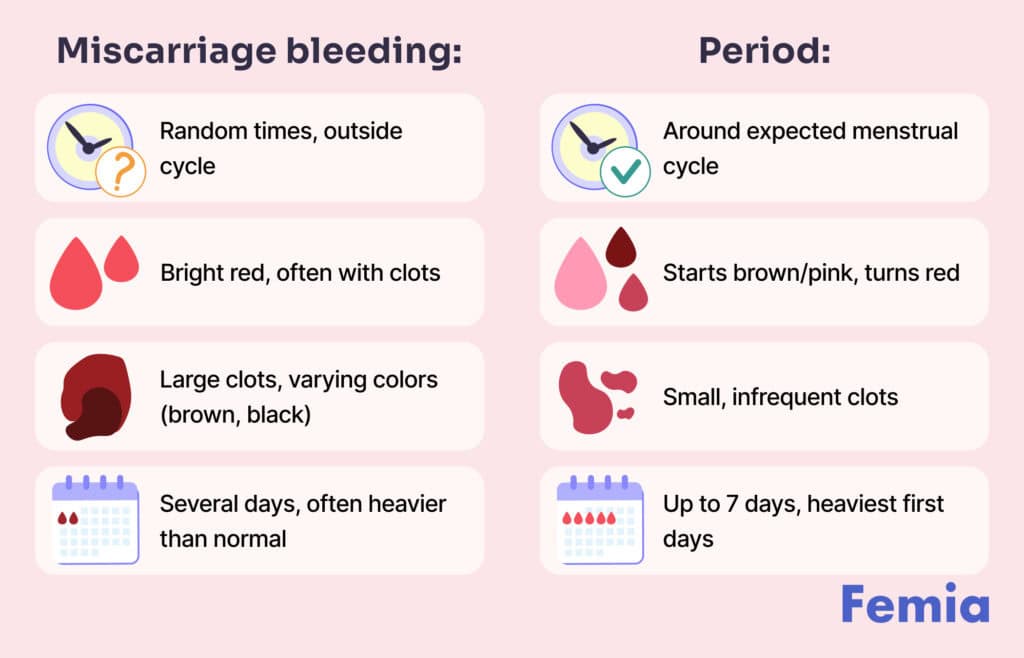
Flow and Color Patterns
Normal Period:
- Typically starts light, becomes heavier for 2-3 days, then tapers off
- Color progresses from brown or pink spotting to bright red, then back to brown
- Total duration usually 3-7 days
- Flow pattern is familiar and consistent with your personal history
Chemical Pregnancy Bleeding:
- May start heavier than a normal period from the beginning
- Can include sudden gushes of blood rather than gradual increase
- Color may be brighter red throughout due to the uterine lining shedding in response to dropping hCG
- Duration may be slightly longer or shorter than your typical period
- May include tissue or clots that look different from normal menstrual clots
Cramping Intensity
Normal Period Cramps:
- Usually begin a day before or on the first day of bleeding
- Respond predictably to over-the-counter pain relief
- Follow your typical pattern—some women have mild cramps, others have severe ones, but the pattern is consistent
Chemical Pregnancy Cramps:
- May be more intense than typical menstrual cramps
- Can include sharp, stabbing pains rather than dull aching
- Sometimes accompanied by lower back pain that exceeds normal period discomfort
- May not respond as well to usual pain management
- Can begin before bleeding starts and continue throughout
Many women report that chemical pregnancy cramping feels “different” from their normal period, even if they can’t articulate exactly how. Trust your body if something feels unusual.
Clotting and Tissue Passage
Normal Period:
- Small clots are common, especially on heavy flow days
- Clots are typically dark red or purple and gel-like
- Tissue passage is minimal and consists of endometrial lining
Chemical Pregnancy Bleeding:
- May include larger or more numerous clots than usual
- Can include grayish or whitish tissue that differs from normal menstrual tissue
- Some women report passing small sac-like structures, though this is rare in true chemical pregnancies (more common in later miscarriages)
- Any tissue that looks unusual should be examined by a doctor
hCG Testing: The Definitive Difference
The only way to definitively distinguish chemical pregnancy bleeding from a normal period is through hCG testing:
Home Pregnancy Tests:
- A positive test followed by bleeding strongly suggests chemical pregnancy
- If you test during the bleeding, a positive result indicates hCG is still present, confirming pregnancy loss rather than a period
- Tests that fade from positive to negative over several days indicate declining hCG
Blood Tests:
- Quantitative hCG blood tests provide definitive answers
- In a chemical pregnancy, hCG levels will be detectable but low, then decline
- In a normal period, hCG should be undetectable (under 5 mIU/mL)
If you’re uncertain, ask your doctor for serial blood tests taken 48 hours apart. Rising hCG indicates a continuing pregnancy, while falling hCG confirms a chemical pregnancy.
Emotional and Psychological Clues
Sometimes your emotional response provides clues. If you feel unexpectedly devastated by what you thought was a period, or if you experience a sense of loss you can’t explain, your body may be processing a chemical pregnancy even if you never tested. This isn’t medical confirmation, but it validates seeking testing if you suspect a loss.
Conversely, if you feel your normal premenstrual emotions and the bleeding follows your typical pattern, it’s likely a normal period.
When Bleeding Requires Medical Attention
Regardless of whether you’re experiencing a chemical pregnancy or a period, seek immediate medical care if you experience:
- Bleeding that soaks through a pad in an hour for more than two consecutive hours
- Severe abdominal or shoulder pain
- Dizziness, fainting, or rapid heartbeat
- Fever over 100.4°F (38°C)
- Foul-smelling discharge
These symptoms could indicate an ectopic pregnancy, infection, or other serious condition requiring urgent treatment.
Charting Your Patterns
If you’re trying to conceive and concerned about distinguishing chemical pregnancy bleeding from periods, consider:
- Testing early with sensitive pregnancy tests starting 10 days after ovulation
- Tracking symptoms in a fertility app to identify your personal patterns
- Taking photos of pregnancy tests to document line progression
- Requesting blood work if you suspect a chemical pregnancy
Understanding your body’s normal patterns makes deviations easier to identify. After one or two cycles of careful tracking, you’ll likely recognize when something differs from your baseline.
Moving Forward
Distinguishing chemical pregnancy bleeding from a normal period matters primarily for emotional processing and fertility tracking. Medically, a single chemical pregnancy requires no intervention. However, knowing what happened helps you process the experience and make informed decisions about future conception timing.